Matrimonial law · Supreme Court update
Married in India. Received a UK Divorce Notice? What the Supreme Court Ruling Says
By Raadhika Gupta · Published · 5 min read
“We married in India. Why did I receive a divorce notice from London?”
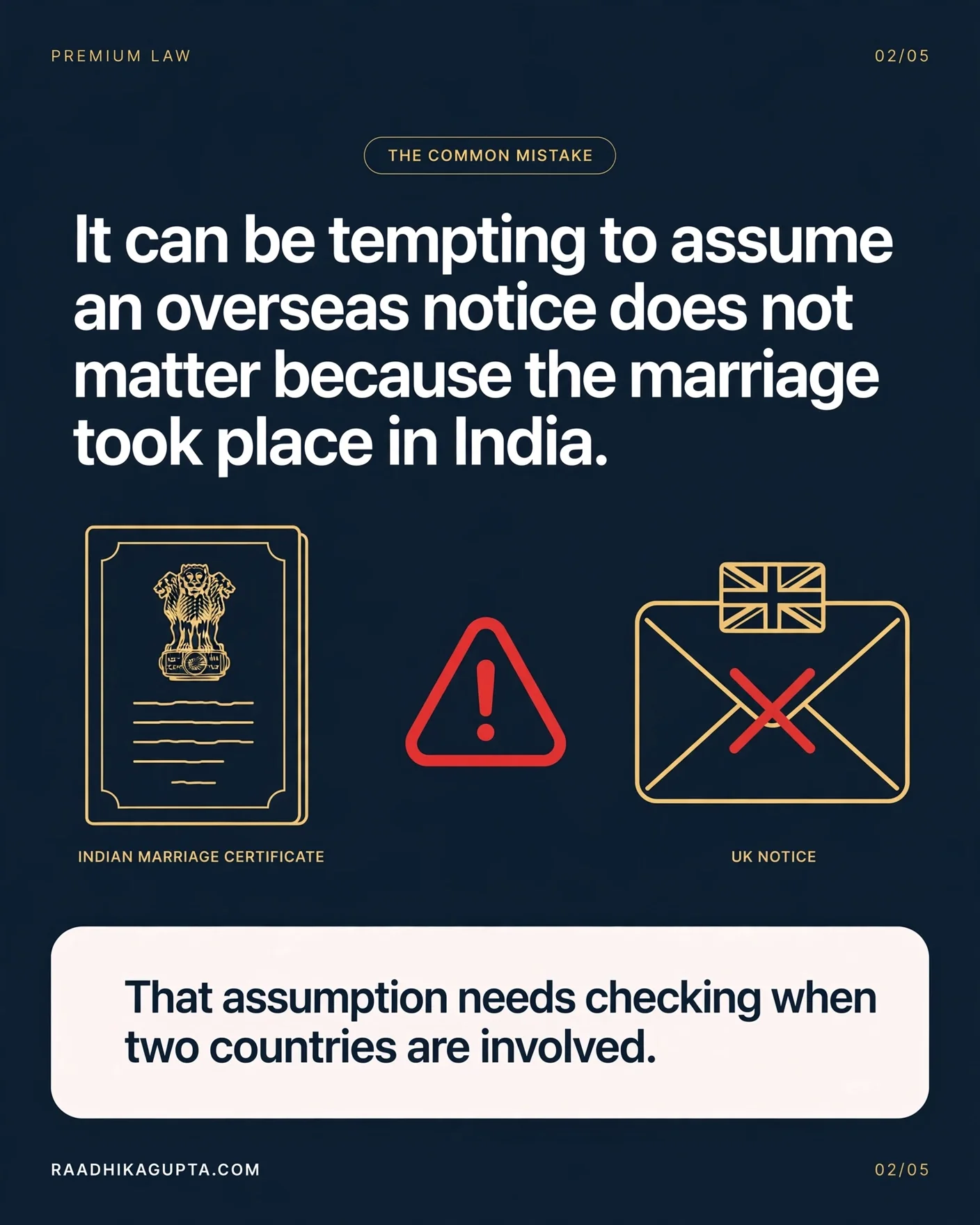
It can be tempting to assume an overseas notice does not matter because the marriage took place in India. That assumption needs checking. The notice, the court’s jurisdiction, the couple’s history and any response deadline all matter.

What did the Supreme Court decide?
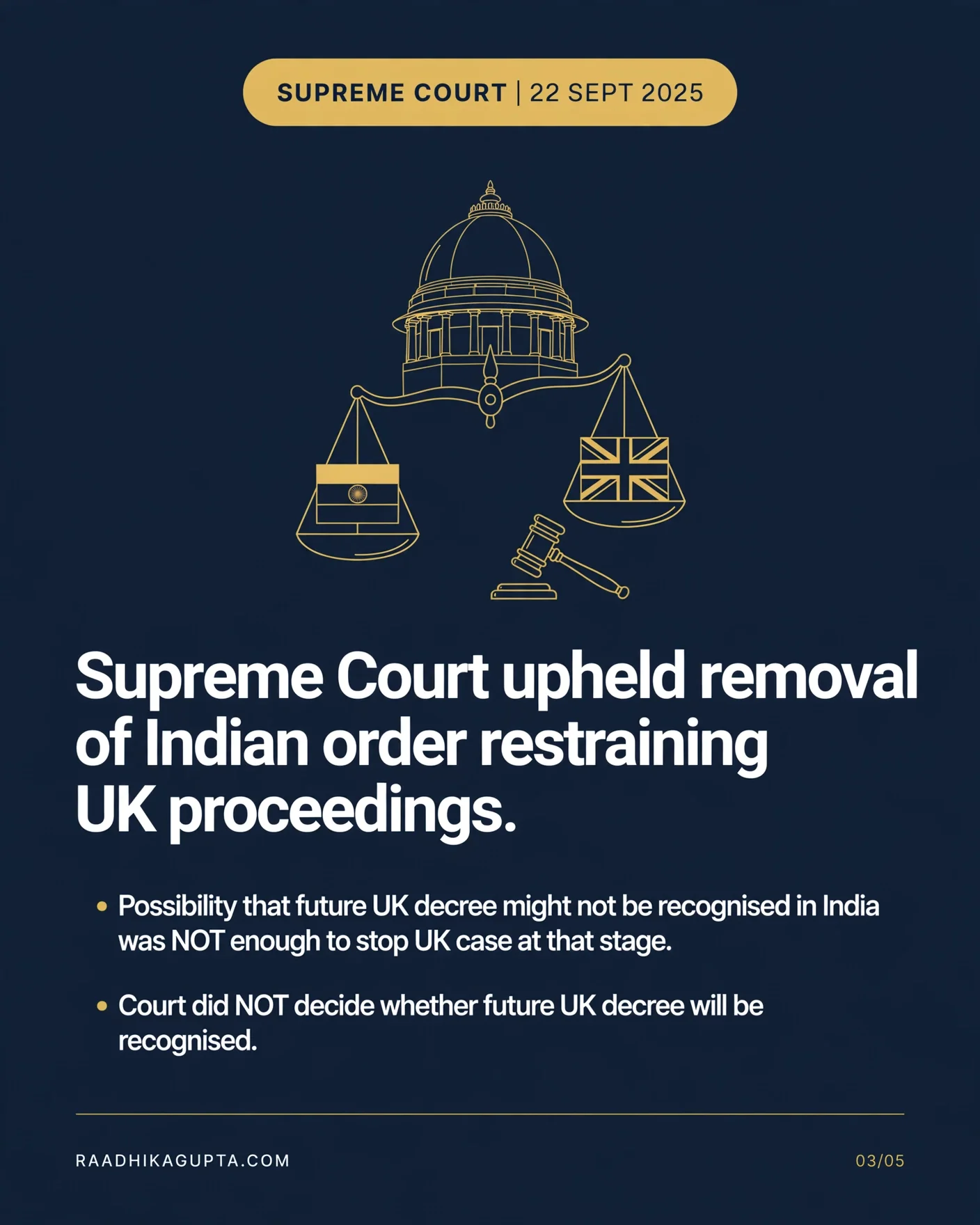
On 22 September 2026, the Supreme Court decided Mihir Prakash Bajoria v. Vidushi Jain Bajoria (2026 INSC 1034). It dismissed the appeal and upheld the Calcutta High Court’s decision to set aside an interim anti-suit injunction. That injunction had restrained the wife from continuing matrimonial and financial proceedings in the UK.
The Court explained that an anti-suit injunction—an order restraining a party from pursuing a case in another country—is an exceptional, fact-sensitive remedy. A concern that a UK court might later make a decree that would not be recognised in India was not enough, by itself, to stop the UK proceedings at that preliminary stage.
What the ruling did not decide
This was not a ruling that every Indian couple can, or must, pursue divorce in the UK. The case involved substantial UK connections, including the parties’ residence and matrimonial life there. The jurisdiction question and other issues depended on the particular proceedings and facts.
The Supreme Court also did not decide whether a final UK divorce decree would be recognised in India. Its judgment noted that a conditional UK divorce decree had been made during the appeal and separately stayed by the Supreme Court on 30 July 2026. The September appeal remained focused on the earlier anti-suit injunction; the Court left challenges to further or final orders open in accordance with law.
So the practical takeaway is limited but useful: do not assume an overseas notice is irrelevant, and do not assume the final result is already settled.
If you receive a UK divorce notice after an Indian marriage
Before seeking advice, organise the documents and dates that help a lawyer understand both the notice and the cross-border history:
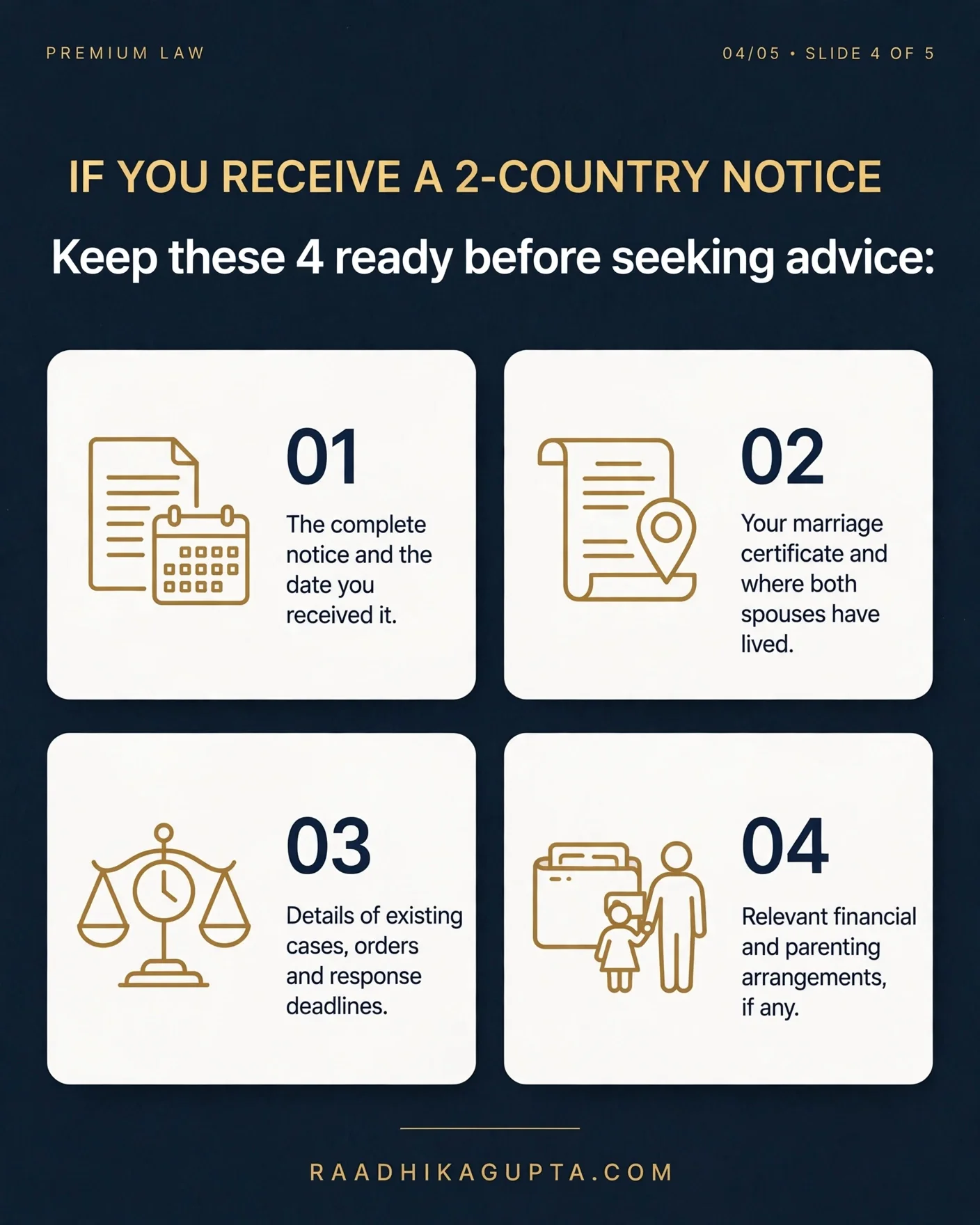
- The complete notice, every attachment and the date you received them.
- Your marriage certificate and a timeline of where each spouse has lived.
- Details of existing cases, court orders and any stated response deadline.
- Relevant financial and parenting arrangements, if any.
Do not ignore a deadline, sign a settlement or reply substantively before understanding what the notice asks and which law or court process applies. In a cross-border matter, advice from lawyers familiar with the relevant jurisdictions may be important.
Common questions
Does an Indian marriage automatically prevent divorce proceedings in the UK?
No single answer applies to every couple. This case involved particular residence, family and financial connections with the UK. Jurisdiction depends on the applicable law and the facts.
Did the Supreme Court decide whether a future UK divorce decree would be recognised in India?
No. The appeal concerned an interim anti-suit injunction. The Court left questions about later orders and their legal effect open for any appropriate proceedings.
What should I do if I receive a UK divorce notice after marrying in India?
Keep the full notice and attachments, note when you received them and any response deadline, and organise records of residence, existing cases and orders before seeking advice from lawyers familiar with the relevant jurisdictions.
The calm response is an informed one
A conversation with your spouse can still be calm. A court notice still deserves timely attention. Getting the facts checked early can help you make decisions without panic or assumptions.

If you are also considering a mutual-consent settlement, see our checklist of terms to review before signing.
Sources
- Mihir Prakash Bajoria v. Vidushi Jain Bajoria, 2026 INSC 1034 (Supreme Court judgment PDF, 22 September 2026).
- LiveLaw’s report on the ruling (24 September 2026).
Note: This is general legal information, not advice for an individual case. Cross-border matrimonial questions depend on the governing law, residence history, court documents and deadlines. Seek timely advice from qualified lawyers in the relevant jurisdictions.