Matrimonial law · Practical checklist
Before You Sign a Mutual Consent Divorce Settlement
By Raadhika Gupta · Published · 3 min read
When people are emotionally exhausted, signing a settlement can feel like the quickest way to end a difficult chapter. But the words you agree to may shape your finances, belongings and parenting arrangements for years.
What should the settlement make clear?
Read each clause in context, especially anything described as “full and final.” Ask what is being paid, returned or waived, by whom, when and how it will be documented.
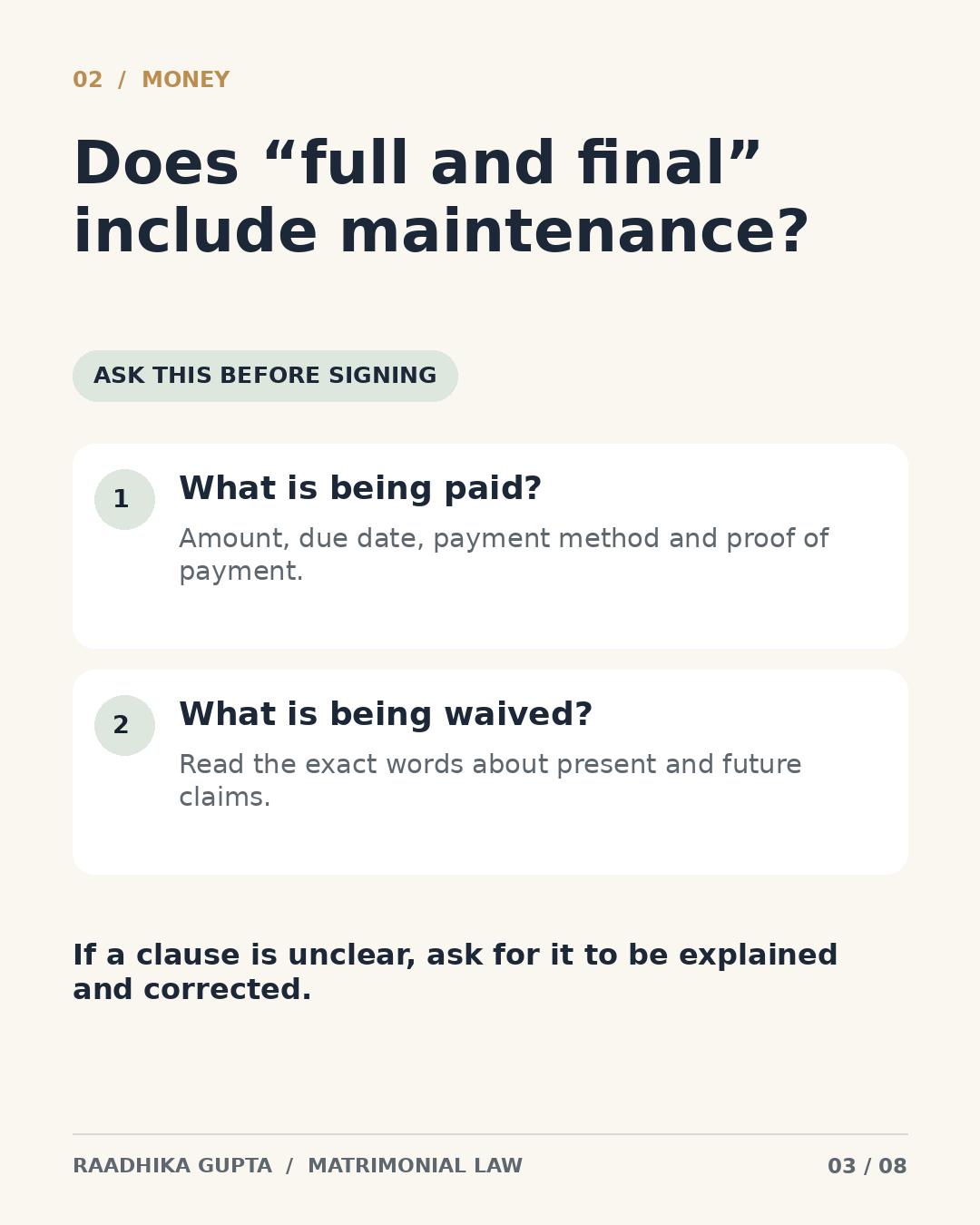
- Maintenance and financial claims: amounts, deadlines, mode of payment and the exact scope of any waiver.
- Property and belongings: jewellery, documents, personal possessions and clear handover dates.
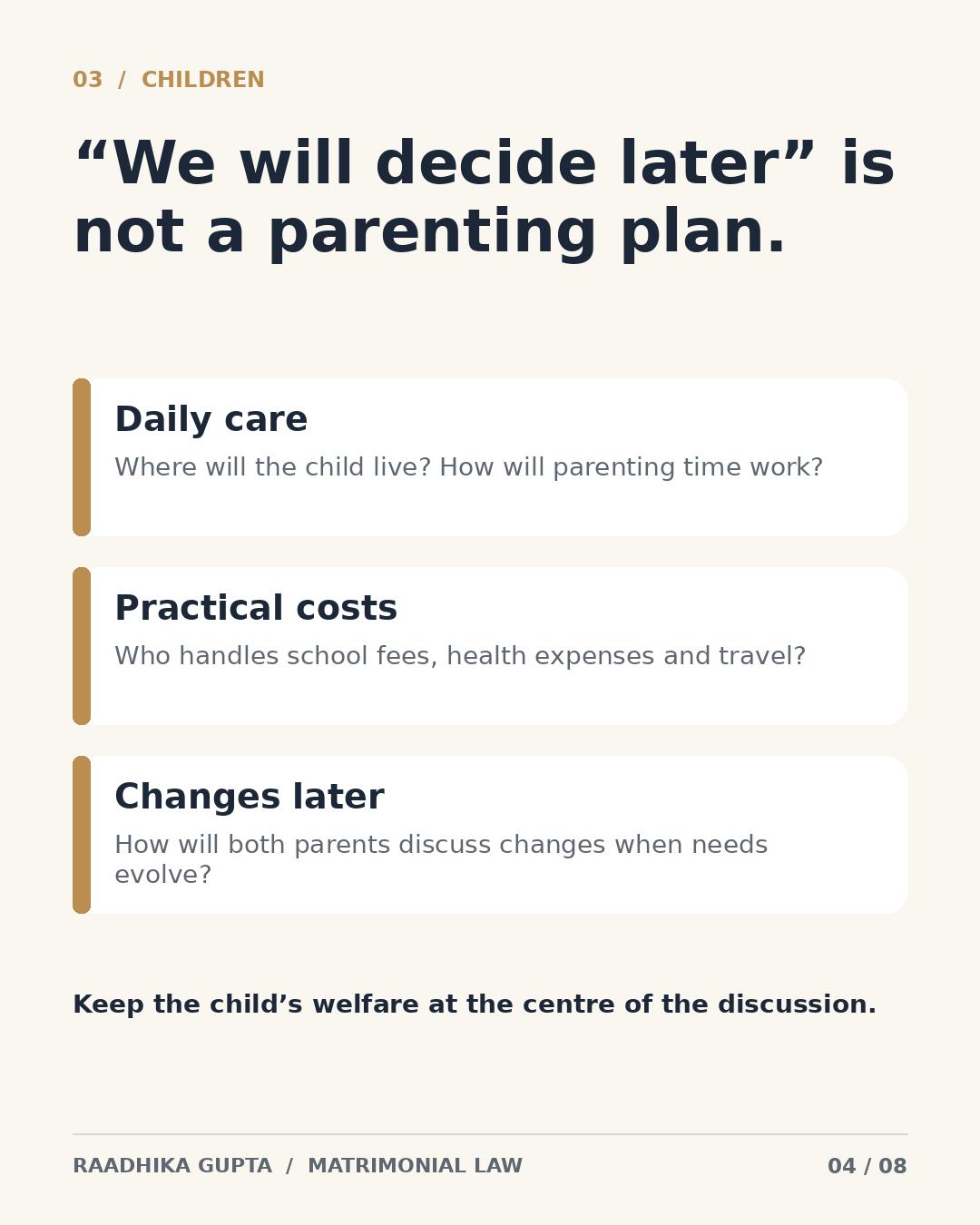
- Children: day-to-day care, contact arrangements, school and health expenses, and how decisions will be made.
- Pending matters: identify each complaint or proceeding and the lawful steps proposed for it. A private agreement does not automatically close every case.
A practical check before signing
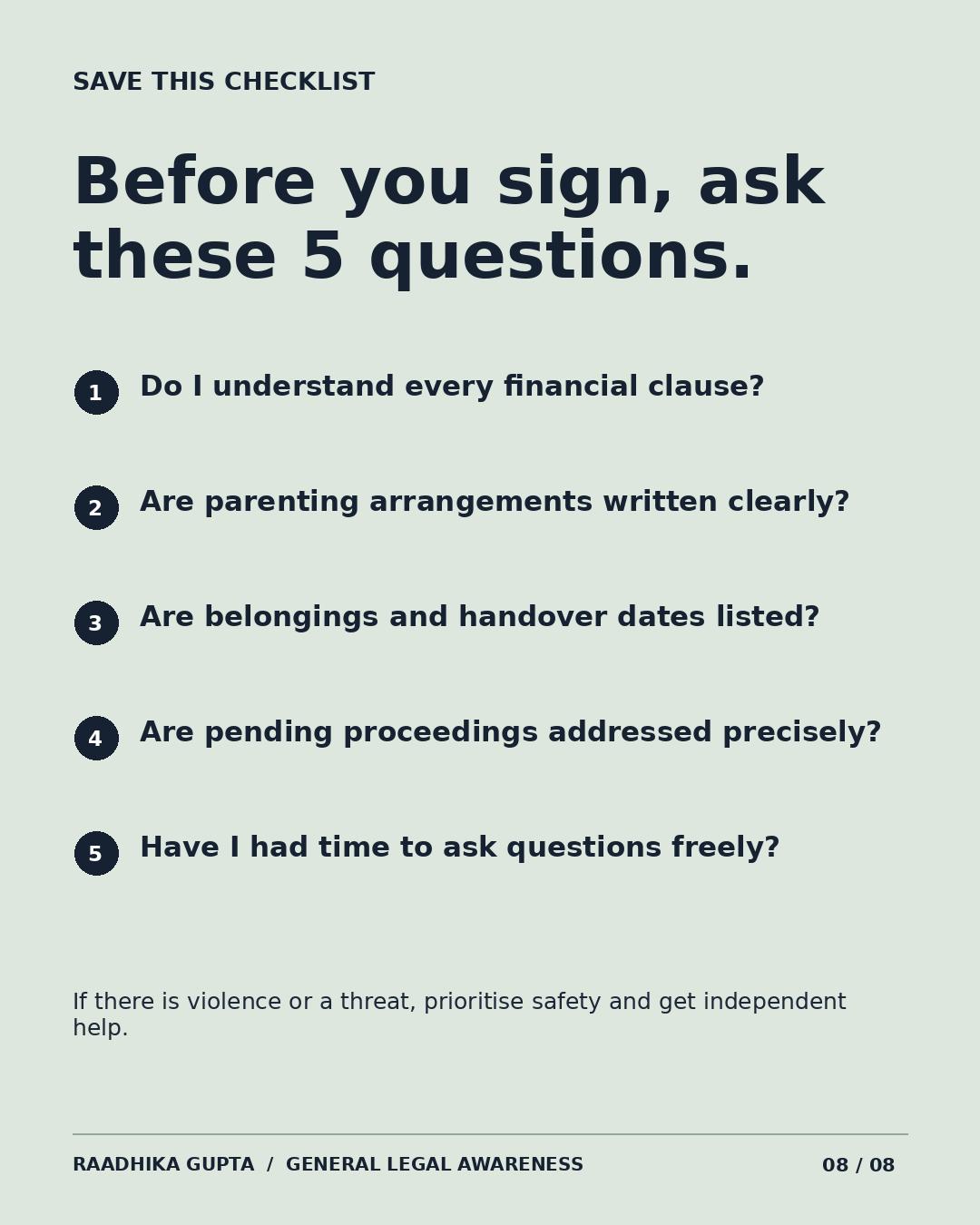
- Read every clause and ask for unclear language to be explained in plain words.
- List what each person is giving, receiving and returning.
- Write down parenting responsibilities and child-related costs where relevant.
- Confirm the status of each pending legal matter separately.
- Understand any waiver of current or future claims before agreeing to it.
- Seek independent legal advice if you feel unsure or pressured.
The legal context in India
For marriages governed by the Hindu Marriage Act, 1955, Section 13B provides a route for divorce by mutual consent. Other marriage laws may have different provisions. The legal effect of a settlement depends on the applicable law, its exact wording, the facts and the court’s orders. Read the Act on India Code.
A good settlement should bring clarity and a fair way forward. Taking time to understand it can help avoid fresh disputes later.
For a cross-border dispute, read our explainer on a UK divorce notice after an Indian marriage and the Supreme Court ruling.
Note: This is general legal information, not advice for an individual case. If there is violence, threats or coercion, prioritise safety and seek timely qualified help rather than feeling pressured to reconcile or sign.